
 Download all information in a PDF document

Nariz del Diablo Train + Ingapirca
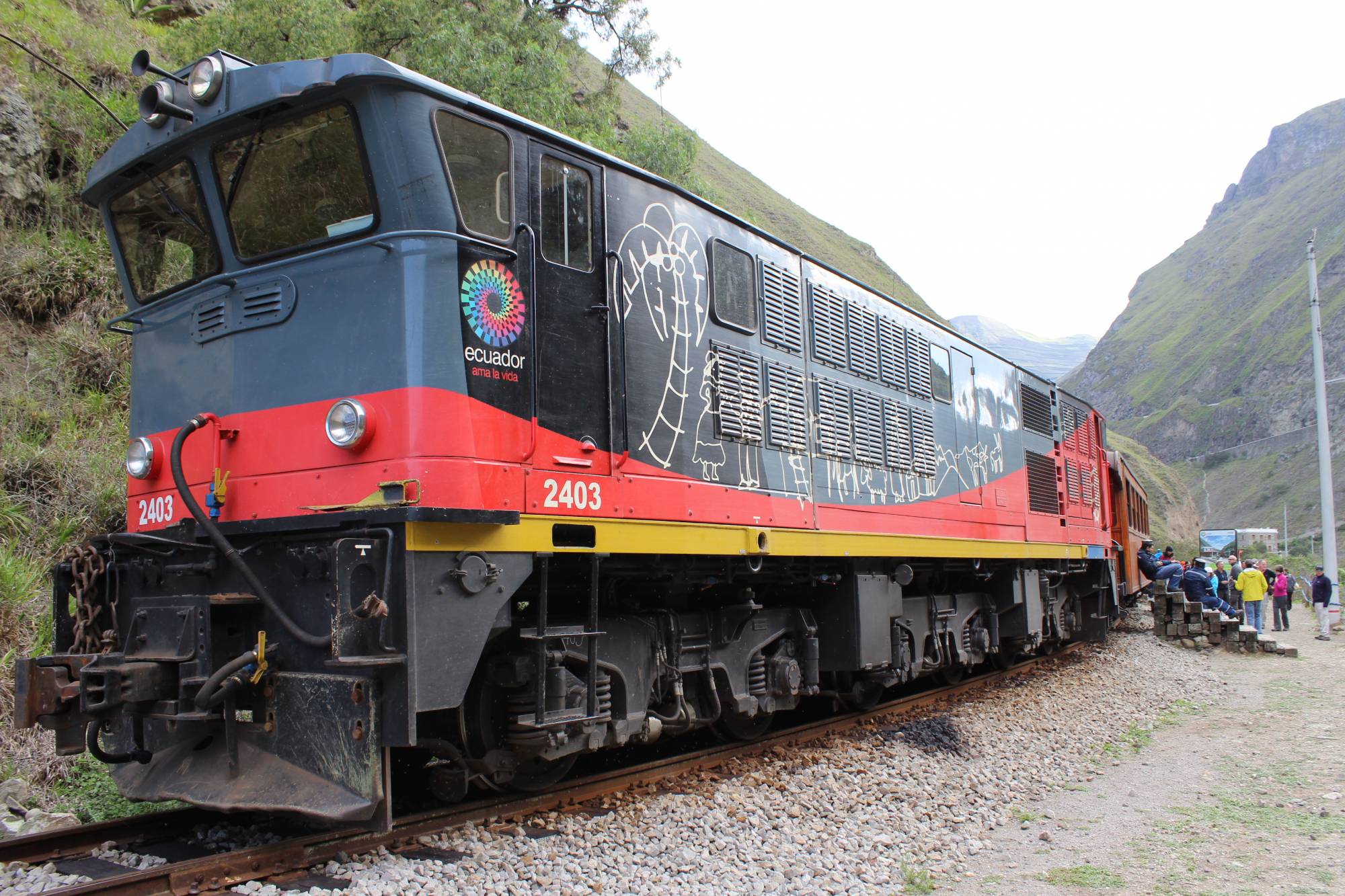
The route called “La Nariz del Diablo” or “The Devil’s Nose” makes up the central section of the Ecuadorian Railroad. It is the stretch that connects the plains of the Coast to the mountains of the Sierra.
Along the way, we’ll be witness to a spectacular landscape of majestic mountains and sheer cliffs.
Location
The route called “La Nariz del Diablo” or “The Devil’s Nose” makes up the central section of the Ecuadorian Railroad. It is the stretch that connects the plains of the Coast to the mountains of the Sierra.
Our tour will begin early in the morning in the town of Alausi, located in the western part of the Andes mountains. El Tren Patrimonial, or “Heritage Train”, will be awaiting us to embark on a one-of-a-kind adventure towards the south of Ecuador.
Along the way, we’ll be witness to a spectacular landscape of majestic mountains and sheer cliffs.
It is here that one of the most ambitious feats of engineering in history can be observed: a railway laid across exposed, rocky cliffs. The only way for the train to be able to move up and down these steeps is in a zig-zag fashion. We will begin by descending 500 meters to the coastal plains. While we zig-zag, we’ll observe the Río Guasuntos and the valley of the Río Chan-Chan before arriving at the station in Sibambe.
Upon our arrival, we will be greeted with a typical dance and have a chance to admire the artisanal crafts of the Andean community of Nizag. We’ll enjoy a guided tour of the station’s museum, as well as the landscape and climate, which offers a few more degrees of warmth than Alausí.
After touring Sibambe we’ll begin our return, a traverse of about 12 kilometers (7.5 miles) back to Alausí that will show us once again the beauty of this region.
Our excursion will continue to Ingapirca, the largest and best-preserved archaeological complex in all of Ecuador. Set upon the windswept mountainside of the southern Andes, these ruins are truly an impressive sight.
Along the way, we’ll observe intriguing landscapes and people in their colorful typical dress.
Ingapirca offers us an incredible view into the past, touching on both Incan and Cañari culture. You’ll be amazed by the different construction methods used to build the temples, such as the builders’ precise solar calculations and aqueduct system.
